










Geiger-Muller (GM) Counter: Working Principle, Structure, Dead Time & Applications

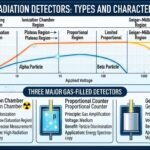
The Geiger-Muller (GM) counter is one of the most widely recognized, portable, and robust radiation detection instruments utilized in health physics, industrial safety compliance, and emergency response. Operating in the highest voltage region of…

Proportional Counters: Engineering, Physics, and Applications
Proportional counters operate within the proportional region (Region III) of the gas-filled detector voltage curve, leveraging internal gas multiplication to bridge the gap between weak primary ionization signals and measurable electronic pulses.…
Ionization Chambers: Engineering, Dosimetry, QA/QC, and Clinical Applications
Ionization chambers represent the gold standard in radiation dosimetry, offering exceptional long-term stability, high precision, and reliability. They are deployed extensively across diagnostic radiology, radiation therapy physics, health physics, and…
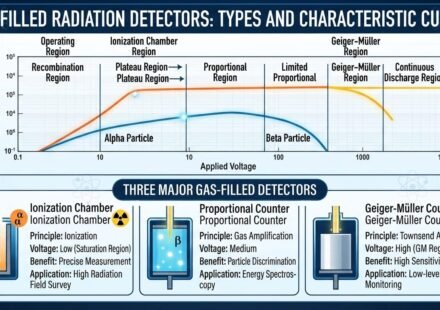
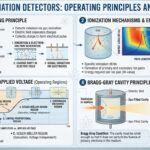
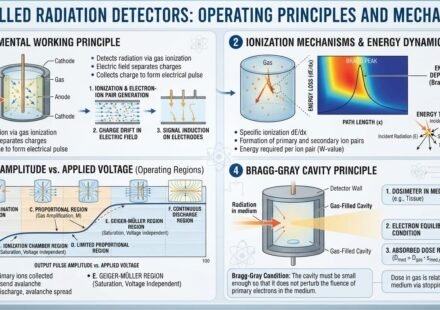
Advanced Technical and Mathematical Analysis of Gas-Filled Radiation Detectors
Gas-Filled Radiation Detectors represent the foundational technology of radiation measurement instrumentation, utilized extensively across diagnostic radiology, radiation therapy physics, nuclear engineering, and industrial safety compliance. Their…
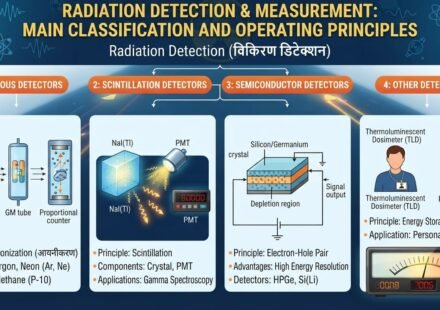
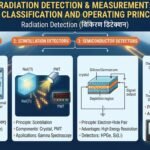
What is Radiation Detection? Principles, Efficiency, and Radiation Detector Types
Radiation detection and measurement form the absolute backbone of radiology, radiation therapy, nuclear medicine, health physics, and industrial safety compliance. Because ionizing radiation is entirely imperceptible to normal human senses—such as sight,…
Radiation Attenuation, Beam Dynamics, and Shielding Calculations
1. Fundamental Mechanics of Attenuation and Interaction Pathways When a radiation beam encounters matter, individual photons undergo particulate or electromagnetic interactions with orbital electrons and atomic nuclei. 2. Linear Attenuation Coefficient…
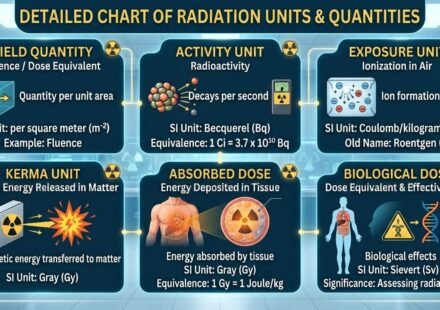
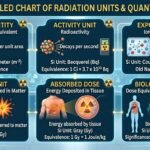
Introduction and Classification of Radiation Units
Radiation units are necessary to express quantities of physical entities on a numerical scale for comparative purposes. Quantification of physical entities is normally done by estimating a measurable physical effect of the physical entity, e.g., heat is…
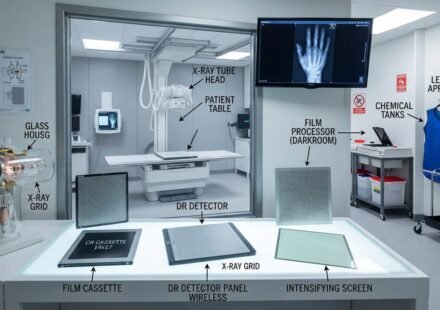
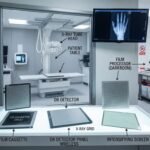
X-Ray and related equipment
X-Ray and related equipment X-rays are a type of electromagnetic radiation that can be used to create images of the interior of objects. X-rays are most commonly used in medical diagnostics, but they are also used in many other industries such as…
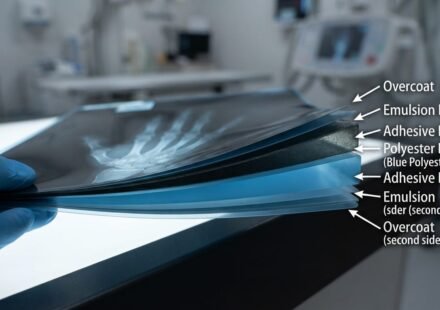
Radiographic X Ray Film
X Ray Film- X-ray film displays the radiographic image, X-ray films for general radiography are composed of an emulsion-gelatin containing radiation-sensitive silver halide crystals, such as silver chloride or silver bromide, and a clear, flexible,…
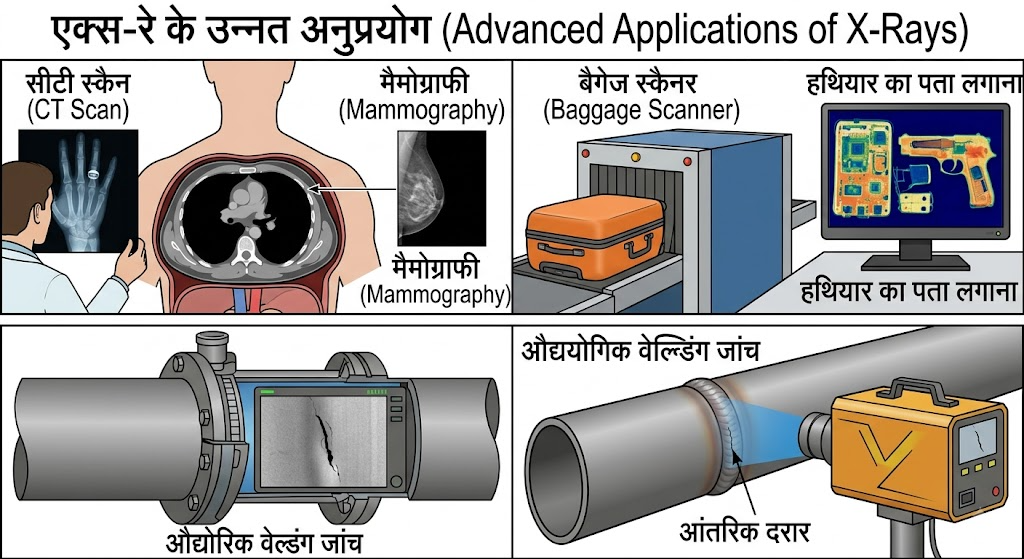
Properties & Effect Of X Rays
Properties Of X Rays – Wave Length – 0.01 to 10 nanometres Frequency – 3 × 10¹⁹ Hz to 3×10¹⁶ Energy – 100 eV to 100 keV Type – Their electromagnetic spectrum wavelength is shorter. Production – When the electrons…