
Mammography: An Essential Tool For Women’s Health
Mammography is specialized medical imaging that uses a low-dose x-ray system to see inside the breasts. A mammography exam, called a mammogram, aids in the early detection and diagnosis of breast diseases in women.
An x-ray exam helps doctors diagnose and treat medical conditions. It exposes you to a small dose of ionizing radiation to produce pictures of the inside of the body. X-rays are the oldest and most often used form of medical imaging.
Mammography is an essential tool for early detection of breast cancer, the most common cancer among women. It is the only imaging test specifically developed for breast cancer, and is recommended for all women aged 40 and over.
Benefits of Mammography
Randomized clinical trials and other studies show that screening mammography can help reduce deaths from breast cancer among women ages 40 to 74 years at average risk of breast cancer, with the evidence of benefit being strongest for women ages 50 to 69 years.
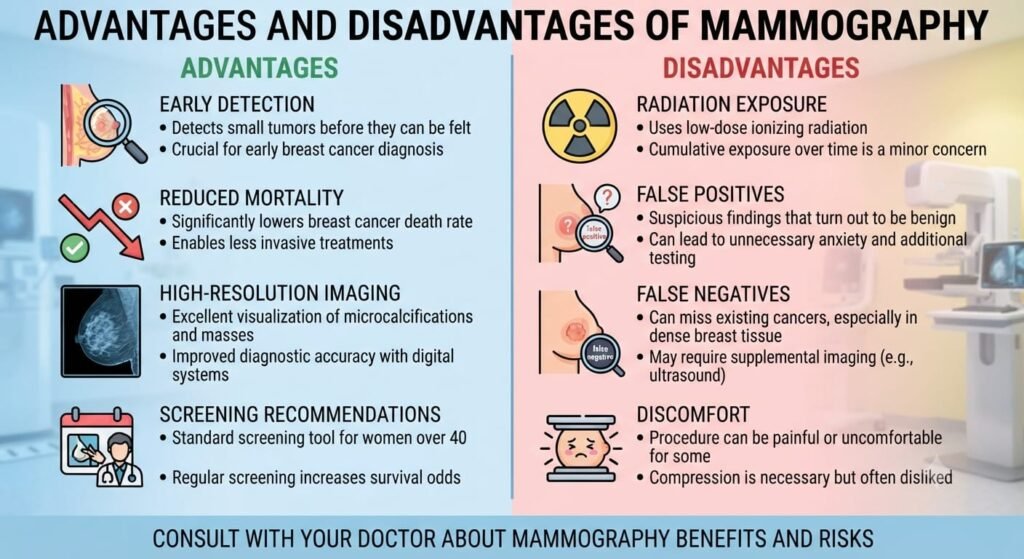
Mammography exams allow doctors to detect changes in breast tissue, before physical changes are visible or even felt. By detecting and diagnosing breast cancer early, mammography can reduce breast cancer mortality rates. Some of the benefits of regular mammography include:
- Improved chances of early discovery, diagnosis and treatment;
Mortality Reduction
Improved Quality Assurance of the Diagnostic Chain
Reduces the risk of dying from breast cancer;
- Reduces the risk of having to undergo chemotherapy
- Allows women to know the health of their breasts
- More options available if the cancer is detected early enough;
- Better monitoring of any recurring breast cancer;
- Reduced risk of the cancer spreading to other parts of the body.
Disadvantages Of Mammography-
Breast cancer screening every 2 years for 20 years can lead to:
Periods of waiting and anxiety when additional examinations are required
Radiation Risk and Other Risks
Risk of False Alarm
Interval Cancers
Possible overdiagnosis
What to Expect During a Mammography Exam
A mammography exam typically involves two digital or film X-ray images of each breast. Patients may experience some minor discomfort, such as pressure or pinching, during the procedure. Between the two images, each breast can be compressed for about 20-25 seconds. Patients should tell their mammography technician if the pressure caused during the exam is too uncomfortable or painful.
Important Considerations Regarding Mammography
Cost: The cost of a mammogram might start at Rs. 800 and reach Rs. 3000 depending on the patient. Women should see a doctor right once if they detect any changes in their breasts’ shape, colour, texture, or nappy discharge.
Mammography is often covered by insurance. However, some policies may require patients to cover a portion of the cost, so it’s important that they check with their health insurance provider beforehand.
Radiation Exposure: False findings and exposure to a small amount of ionising radiation during the operation are two dangers associated with mammography. Every day, the natural environment exposes all of us to ionising radiation, but further exposures can raise the risk of acquiring cancer in later life. Mammography exams use a small amount of radiation. However, the benefits of early detection significantly outweigh the potential risk of the radiation.
Timing: You don’t need to do anything once you’ve scheduled your annual mammography appointment. Try to schedule your mammogram for one to two weeks following the start of your period because breasts can be sore the week before and during menstruation. The recommended age for mammogram screening is 40 and over. However, those with a family history of breast cancer may need to begin early. It is important to discuss any recommendations with a doctor.
Conclusion
Mammography is a safe and important tool for early detection of breast cancer. The ability to detect and diagnose breast cancer in its early stages significantly improves outcomes for patients, and can save lives.